
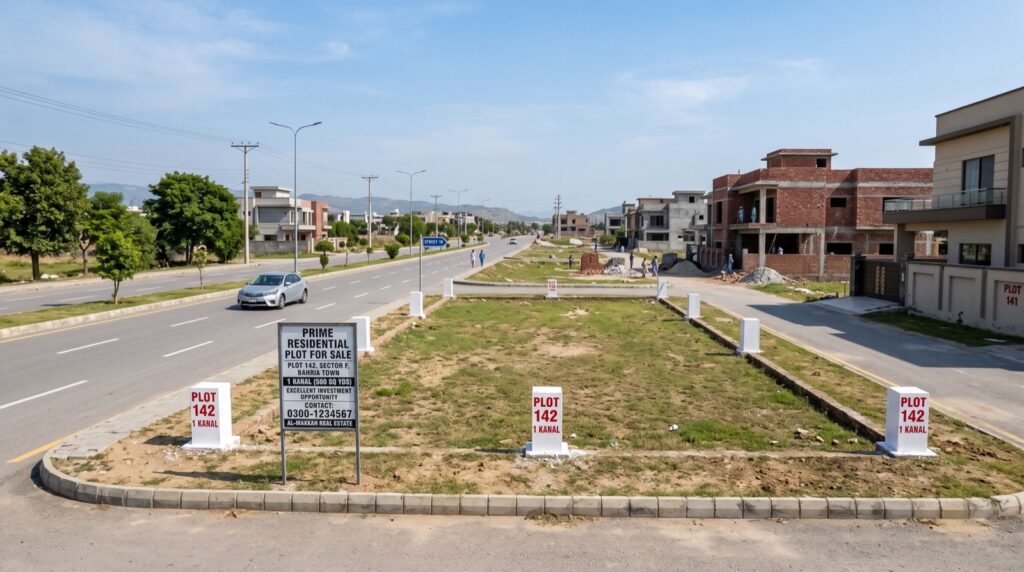
Instalment schemes have become the default route into land ownership for Pakistan’s salaried class. On paper the pitch is irresistible: instead of finding fifty lakh rupees at once, you commit a modest booking amount and spread the balance across three or four years of quarterly payments. What the pitch rarely includes is the arithmetic underneath — the surcharges, the possession charges, the cost of a missed quarter, and the real total you will have paid by the day the plot is finally yours. This article unpacks that arithmetic so the numbers never ambush you halfway through a plan.
The Anatomy of a Typical Plan
Most residential plot schedules in the twin cities region follow a recognisable skeleton, and learning to read one published schedule teaches you to read them all. Reviewing a live example such as the Silver City payment Plan alongside this section will make each component concrete rather than abstract.
The Booking Amount
Usually ten to twenty percent of total price, paid at form submission. Understand its refund treatment before paying: many schemes deduct a percentage as “administrative charges” if you surrender, and some hold refunds for months. The booking receipt, not the dealer’s promise, defines your rights here.
The Instalment Ladder
Monthly or quarterly payments make up the bulk of the price, typically sixty to seventy percent. Quarterly structures suit salaried buyers with annual bonuses; monthly structures suit business owners with steady cash flow. Note whether the schedule is flat or escalating — a plan whose later instalments balloon is quietly betting you will default in year three.
The Tail-End Charges
Ballot charges, possession charges, and development charges often sit outside the headline price entirely. On a plot marketed at forty-five lakh, these can add another four to seven lakh. Ask for the figure in writing at booking, because “to be announced at possession” is where budgets go to die.
Running the Numbers on a Sample Plot
Take a hypothetical five-marla plot priced at PKR 4,500,000 on a four-year plan: PKR 500,000 booking, sixteen quarterly instalments of PKR 218,750, and PKR 500,000 at possession. Your quarterly commitment equals roughly PKR 73,000 per month of set-aside income. Now stress-test it. If your household saves PKR 90,000 monthly today, one salary interruption, one wedding, or one medical event pushes you into the late-payment zone, where most schemes charge a surcharge per overdue instalment and reserve the right to cancel after three consecutive misses. The correct question is never “can I afford the instalment?” but “can I afford it in my worst realistic quarter?”
Instalments Versus Lump Sum: The Honest Trade-Offs
- Cash discount: Full upfront payment commonly earns five to ten percent off, which on our sample plot is up to PKR 450,000 — effectively the interest you pay for spreading the cost.
- Inflation hedge: Instalments are paid in progressively cheaper rupees, which partially offsets that premium during high-inflation years.
- Exit flexibility: A part-paid file can often be sold on, transferring remaining instalments to the next buyer — an exit a lump-sum buyer pays more to obtain.
- Cancellation risk: The instalment buyer alone carries default risk; the lump-sum buyer can never be cancelled for non-payment.
- Ballot timing: Some schemes ballot plot numbers only among fully paid or regularly paying members, so payment discipline can literally decide your location.
The Costs Nobody Puts in the Advertisement
Beyond the schedule itself, budget for transfer fees when you eventually sell or buy a resale file, membership and processing fees at booking, documentation charges, and the taxes applied at transfer stage, which shift with every federal budget. Filers and non-filers face sharply different withholding rates, so your tax status is itself a line item. A sensible rule: whatever total the payment schedule shows, provision an additional eight to twelve percent for the ecosystem around it. Buyers who do this find possession day exciting; buyers who do not find it expensive.
When Vertical Beats Horizontal
One structural shift worth watching is the arrival of dedicated apartment and mixed-use zones inside modern societies. Instalment plans for High Rise Plots behave differently from residential ones: the entry tickets can be larger, but rental yield begins soon after construction, meaning the asset can start servicing its own remaining instalments. For an investor whose goal is income rather than a future family home, comparing the vertical schedule against the horizontal one — on yield, not just price — frequently changes the decision.
What Happens When Life Interrupts the Schedule
Plans rarely fail because buyers were reckless; they fail because life happened faster than the schedule allowed. Build your defences in advance. Keep two instalments’ worth of buffer in a separate account and treat it as untouchable. If trouble is coming, contact the developer’s recovery department before the due date rather than after — most offices will restructure or defer for a buyer who communicates early, and almost none will for a buyer who goes silent. And if the situation is genuinely unrecoverable, selling the part-paid file quickly at a modest discount nearly always beats absorbing months of surcharges followed by a cancellation deduction. The worst outcome in this market is not a small loss taken early; it is a large loss taken slowly.
Questions to Ask Before Signing Anything
Put these to the developer’s office in writing and keep the replies: What is the exact surcharge formula for a late instalment? After how many missed payments does cancellation become possible, and what is refunded? Are development charges included or separate, and are they capped? Is the plot number allotted at booking or by ballot, and what governs the ballot? Can the file be transferred mid-plan, and at what fee? An office that answers these five questions promptly and in writing is telling you something reassuring about how it will behave for the next four years.
A Final Word on Planning the Whole Move
An instalment plan is a four-year relationship, not a transaction, and it usually coincides with other big transitions — new jobs, school changes, sometimes an actual relocation to the capital region. Travel and settling-in guides for the area consistently advise leaning on reputable service experts rather than improvising, and the same logic applies to structuring your property finances: one afternoon with someone who has watched a hundred payment plans play out is worth more than a month of forum threads.
Do the arithmetic before the emotion. Print the schedule, add the tail-end charges, provision the extra ten percent, stress-test your worst quarter, and only then decide. A payment plan chosen this way becomes what it was always supposed to be — a disciplined savings machine that ends with a plot registration in your name instead of a cautionary story at a family dinner.